Electric Handheld Fan vs a Simple Folding Fan: Is the Tech Worth It?
A $2 paper fan costs nothing and never runs flat. A rechargeable one costs $30-100 and needs charging. Here's when the extra cost and hassle is genuinely worth it, and when it isn't.
By KeepCoolExpert Team · Updated 14 October 2026
Handheld fans have had a real moment lately — office desks, commutes, concerts, and (based on real buyer reviews) a lot of people managing menopause hot flushes have all driven renewed interest in both the old-fashioned folding kind and the rechargeable electric kind. Both genuinely work. The question is which one is worth it for how you’d actually use it.
What you’re actually choosing between
A manual folding fan costs next to nothing, needs no charging, and will still work in ten years. An electric handheld fan moves noticeably more air with no arm effort, often runs for hours on a charge, and increasingly comes with genuine extras — a torch, a phone charger, a desk-fan mode. Neither is objectively “better” — they trade off differently depending on how often and where you’d actually use one.
| Manual folding fan | Electric handheld fan | |
|---|---|---|
| Upfront cost | Very low ($2-15) | Low-medium ($30-100+) |
| Ongoing cost | None | Occasional charging |
| Airflow | Limited to arm speed | Consistently stronger |
| Hands-free use | No | Often yes (desk mode) |
| Can run out mid-use | No | Yes, if not charged |
| Extra features | None | Torch, power bank, digital display on some models |
When a manual fan is genuinely the right call
If you want something that will always work, costs almost nothing, and you’re not using it for hours at a stretch, a manual fan is a completely reasonable choice, not a downgrade. It’s the sensible pick for a bag you keep for emergencies, a spare for guests, or anywhere charging something before you leave the house is more hassle than the fan is worth. The trade-off is real — you’ll get noticeably less airflow, and your arm does the work — but for occasional, short bursts of cooling, that trade-off barely matters.
When the electric version earns its cost
Where an electric handheld fan genuinely pulls ahead is sustained use: a hot commute, a desk without decent office air conditioning, or standing outside at an event for hours. Real buyer reviews of the FlickFan below specifically mention exactly these situations — commuting, concerts, menopause hot flushes, an uncomfortably warm workplace — and the common thread is needing consistent airflow for longer than your arm would tolerate holding a manual fan. A desk-mode option (both products below fold out to stand hands-free) is also a real, practical advantage a manual fan simply can’t offer.
Two real options, at different price points
The FlickFan is a genuinely Australian-made-and-run product (Melbourne-based since 2017), and at $34 it’s a 5-in-1 device — handheld fan, desk fan, torch, tabletop light, and power bank — with a 4,500mAh battery rated for up to 26 hours and under 50dB even at full power, per the brand’s own testing. The JISULIFE Pro1 S costs roughly three times as much at $99, and that gets you a noticeably more premium build (aluminium alloy body, three-phase brushless motor) and far more granular control (100 speed levels with a digital battery display, versus a simpler dial). Both are genuinely well-reviewed, though on relatively small review samples at time of writing — worth knowing rather than treating either rating as the final word.
Which one should you actually get
If you want the cheapest genuine upgrade over a manual fan, the FlickFan does the job at a price close to a nice manual one anyway. If you want something that feels closer to a premium gadget — finer control, sturdier build, a longer feature list — the JISULIFE is the one to spend more on. And if you’re honestly only going to reach for this a handful of times a year, save the money and cost and get a manual one instead; there’s no shame in the simple option being the right one.
Worth considering
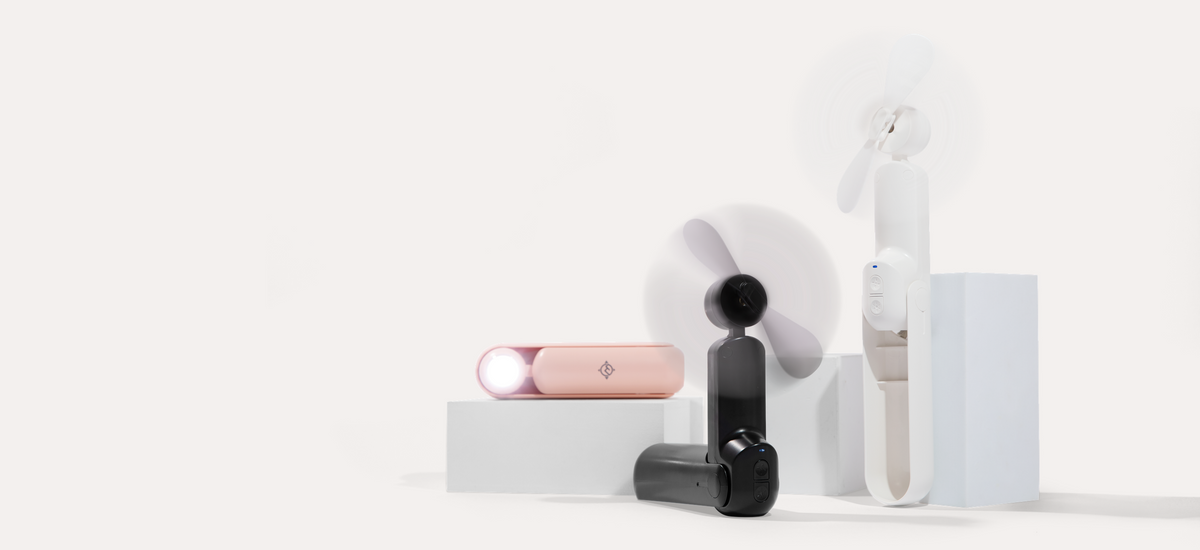
FlickFan
FlickFan 5-in-1 Rechargeable Handheld Fan
From A$34.00
4.9★ (10 reviews) on TrailSurvivor
- + Genuinely Australian brand (Melbourne-based since 2017), not a relabelled marketplace import
- + 5-in-1: handheld fan, desk fan (unfolds to 270°), torch, tabletop light, and power bank in one device
- + 4,500mAh battery rated for up to 26 hours, and under 50dB even at full power per the brand's own spec
- − Only 10 reviews at time of writing — the 4.9★ average is a small sample, not the same weight of evidence as a bigger listing
- − 166g and pocket-sized by design, so airflow is modest next to a larger desk fan — it's built for personal, close-range cooling, not for a whole room
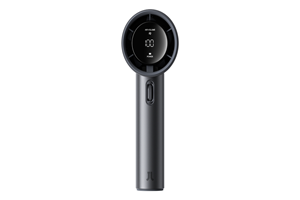
JISULIFE
JISULIFE Pro1 S Handheld Fan
From A$99.00
4.9★ (7 reviews) on Harvey Norman
- + 100 wind speed levels with a digital display showing live battery status, well beyond the usual 3-speed dial
- + 5,000mAh battery — 3 to 15 hours depending on setting, with an 18W fast charger option (1.5-2 hours to full)
- + Aluminium alloy body and a three-phase brushless motor, a step up in build quality from most handheld fans
- − Only 7 reviews on this listing at last check (2026-10-14) — a genuinely thin sample despite the high average
- − At $99, roughly triple the price of the FlickFan above — the extra buys build quality and speed granularity, not a fundamentally different cooling experience
Frequently asked questions
- Does a handheld fan actually cool the air, or just me?
- Just you, whether it's electric or manual — same as any fan, it moves air across your skin to help sweat evaporate faster, it doesn't lower the temperature around you. That's still genuinely effective for personal comfort in heat, especially somewhere you can't install real cooling (an office, public transport, a tent), but it's a different job to an air conditioner, not a smaller version of the same thing.
- Is an expensive electric handheld fan actually better than a cheap one?
- Mostly in build quality and control granularity, not in the basic experience of being cooled. The JISULIFE Pro1 S below offers 100 speed levels and an aluminium body for roughly triple the FlickFan's price — genuinely nicer to use, but not a fundamentally different result. Past a certain point you're paying for polish, not more cooling.
- When is a manual fan actually the better choice?
- Whenever you want zero maintenance and zero chance of it running out at the wrong moment — a bag you're not likely to charge things from, a gift, a spare for guests, or genuinely occasional use where charging a battery before every outing is more hassle than it's worth. It moves less air than an electric one, but that's the entire trade-off, and for light or backup use it's a completely reasonable one.