Portable AC vs Split-System vs Evaporative Cooler vs Fan
Four genuinely different ways to cool a room, compared on running cost, installation, noise, and how well each actually performs in UK conditions.
By KeepCoolExpert Team · Updated 14 October 2026
- Portable air conditioner
- Split-system air conditioner
- Evaporative cooler
- Fan
Our verdict
If you can install one, a split system wins on every axis except upfront cost. If you can't, portable AC is the honest fallback for genuinely hot rooms — everything else is a fan with better marketing.
These four options solve overlapping but different problems, and the marketing on all of them tends to overstate what they can do. Here’s how they actually compare.
At a glance
| Split system | Portable AC | Evaporative cooler | Fan | |
|---|---|---|---|---|
| Installation | Professional, permanent | None (window kit only) | None | None |
| Typical running cost (per night) | Low | Medium–high | Low | Very low |
| Noise (indoor) | Low | Medium–high | Medium | Low–medium |
| Actually lowers air temperature | Yes | Yes | Partially, humidity-dependent | No — cools you, not the room |
| Needs outdoor wall/window access | Yes | Partial (venting hose) | No | No |
| Typical upfront cost | High | Medium | Low–medium | Low |
Split-system air conditioning
The benchmark for effectiveness and running cost, because the noisy, heat-generating part of the system sits outside. The trade-off is entirely upfront: professional installation, and you generally need either freehold ownership or explicit leasehold/landlord permission to fit the outdoor unit. See our guide to landlord and leasehold rules on external units for what’s usually allowed.
Portable air conditioners
The practical choice when installation isn’t possible. They genuinely lower air temperature, unlike a fan or (fully) an evaporative cooler, but they’re working against physics: the compressor and condenser are inside the room with you, so they run hotter, louder, and less efficiently than a split system doing the same job. The exhaust hose also needs to vent through a window, which usually means a permanent gap-filler kit.
Evaporative coolers
These cool air by evaporating water into it, which also raises humidity — great in a hot, dry climate, mediocre in the kind of humid heatwave that actually drives most UK cooling purchases. They’re cheap to buy and run, and add moisture that can be genuinely pleasant in a dry room, but don’t expect split-system results.
Fans
A fan doesn’t cool the room’s air at all — it cools you, by increasing evaporation from your skin. That sounds like a downgrade, but for a huge share of UK cooling needs (a warm night, not a heatwave) it’s the most cost-effective option by a wide margin, and it’s what we recommend as a first purchase in our bedroom cooling guide.
Which one should you actually buy?
Run your room through our room-size calculator — it takes your constraints (outdoor access, room size, sun exposure) and points you at the right category instead of a generic BTU number.
Worth considering
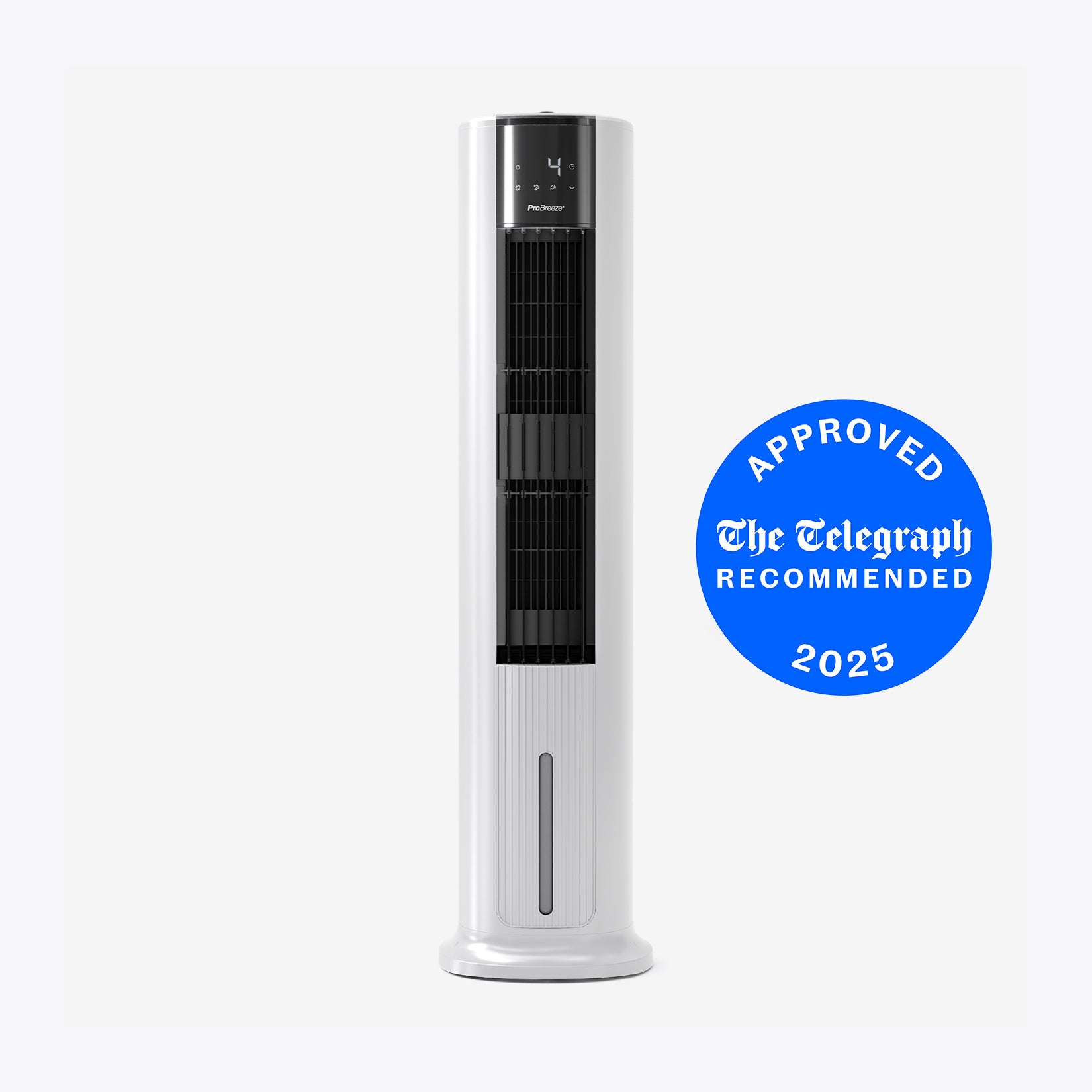
Pro Breeze
Pro Breeze OmniAir 7L Evaporative Air Cooler & Portable Tower Fan
From £149.99
Currently showing as sold out
- + 6L usable tank plus 2 included ice packs — a genuine step up from a plain fan in a properly hot room
- + Night mode drops noise to 40dB, quiet enough for a bedroom
- + Doubles as a fan-only mode for when you don't want the added humidity
- − Showing as sold out direct from Pro Breeze when we rechecked on 2026-10-14, with the price now £149.99 (it was £199.99 in August) — this whole category sells out fast in a heatwave, worth checking back or trying another retailer
- − At 11.4kg, this isn't something you casually move room to room
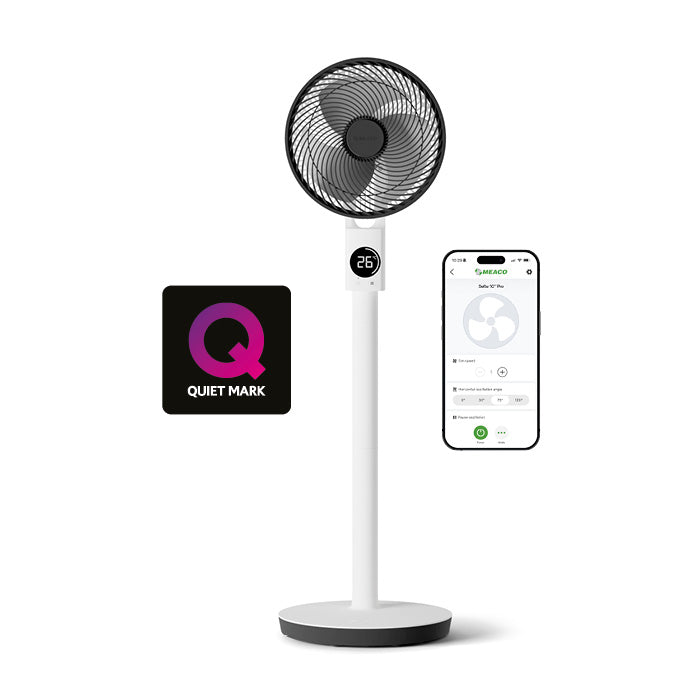
Meaco
MeacoFan Sefte Pro 10-inch Pedestal Air Circulator
Full review →From £199.99
- + Pedestal height suits bedroom or living room placement better than a desk fan
- + 3-year warranty as standard across the Meaco fan range
- − Costs meaningfully more than Meaco's standard 10-inch pedestal (£179.99) — worth checking whether the extra features justify it for your use case
- − Sold out direct from Meaco, with the listing now saying back in stock January 2027 — still in stock via Air Con Centre at £199.99 as of 2026-10-14
Frequently asked questions
- Do evaporative coolers work in the UK?
- Partially. They work well in low-humidity air, which the UK doesn't reliably have — performance drops noticeably during the humid heatwave conditions when you need cooling most. They're best treated as a budget, dry-climate option rather than a general-purpose AC substitute.
- Is a portable AC unit as effective as a split system?
- No — a portable unit has to draw in the room's own warm air to cool its condenser and then exhaust that heat back out through a hose, which is inherently less efficient than a split system's outdoor condenser. Expect a portable unit to work noticeably harder, and run louder, to hit the same temperature.