Split System vs Portable AC vs Evaporative Cooler vs Fan: The Honest Australian Comparison
Four genuinely different ways to cool a home — and unlike most cooling advice, the right answer here depends heavily on which Australian climate you're actually in, not a single universal pick.
By KeepCoolExpert Team · Updated 14 October 2026
- Split-system air conditioner
- Portable air conditioner
- Evaporative cooler
- Fan
Our verdict
There's no single winner here the way there might be in a more climate-uniform country. In Perth or Adelaide's dry heat, evaporative cooling is a genuinely smart choice, not a compromise. In Brisbane, Sydney's coastal suburbs, or Darwin, it's a poor fit and split-system is the real answer. Check your own climate before assuming either way.
Most cooling comparisons give one verdict and apply it everywhere. That’s a genuine mistake in Australia — the country spans dry desert climates, humid subtropical coasts, and true tropical humidity, and the honest best answer for a Perth home is close to the wrong answer for a Brisbane one. Here’s how these four options actually compare, climate factored in rather than glossed over.
At a glance
| Split system | Portable AC | Evaporative cooler | Fan | |
|---|---|---|---|---|
| Installation | Professional, permanent | None (window kit only) | None | None |
| Typical running cost | Low | Medium–high | Very low | Very low |
| Noise (indoor) | Low | Medium–high | Medium | Low–medium |
| Actually lowers air temperature | Yes | Yes | Yes, in the right climate — see below | No — cools you, not the room |
| Works the same regardless of climate | Yes | Yes | No — varies dramatically by humidity | Yes |
| Needs landlord/strata approval | Usually | No | No | No |
Split-system air conditioning
The realistic default for most Australian homes, not an aspirational upgrade — see our split-system buying guide for sizing and installation specifics. It performs consistently well regardless of climate, which is exactly why it’s the safe universal answer in humid areas where evaporative cooling can’t compete. The trade-off is upfront: professional installation is a legal requirement for the refrigerant lines, and renters generally need landlord consent, plus strata approval in apartment buildings.
Portable air conditioners
The practical choice when installation isn’t possible — no consent, no strata approval, just plugged in and vented through a window. It genuinely lowers air temperature, unlike a fan or (in the wrong climate) an evaporative cooler, but the compressor and condenser sit inside the room with you, so it runs hotter, louder, and less efficiently than a split system doing the same job.
Evaporative coolers — the one that depends entirely on where you live
This is where Australia genuinely differs from cooling advice written for more climate-uniform countries. Evaporative cooling works by evaporating water into the air, which only cools effectively when that air is dry to begin with:
- Perth, Adelaide, inland dry regions: genuinely excellent, not a budget compromise — cheaper to buy and run than a split system, with real cooling performance.
- Melbourne: borderline. Good on the hot, dry days that dominate a heatwave, noticeably worse through humid, changeable spells.
- Sydney (especially coastal suburbs), Brisbane: a poor fit — humidity limits real performance regardless of brand or tank size.
- Darwin and the tropical north: not recommended at all, full stop.
Use our evaporative cooling checker for a direct answer for your own city, or the fuller climate-by-area breakdown for the reasoning behind each one. One exception applies regardless of climate: on a bushfire smoke day, evaporative cooling actively draws smoke-affected air inside — see our bushfire smoke cooling guide for what to run instead on those specific days.
Fans
A fan doesn’t cool the room’s air at all — it cools you, by increasing evaporation from your skin. For a genuinely large share of Australian cooling needs (a warm night rather than a 40°C day), it’s the most cost-effective option by a wide margin, and it works identically regardless of which climate zone you’re in.
Which one should you actually buy?
Start with your climate, not a generic top pick: if you’re in a dry zone, evaporative cooling is a real contender, not just the cheap option. If you’re not, or you want guaranteed performance regardless of weather, a split system (if installation is possible) or portable AC (if it isn’t) is the honest answer. Our room-size calculator covers sizing once you’ve settled on a type.
Worth considering
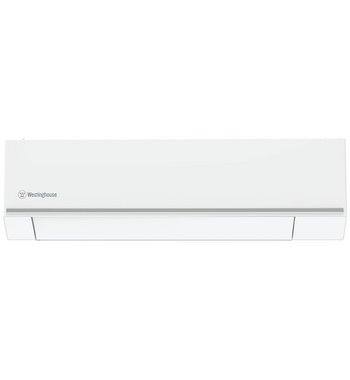
Westinghouse
Westinghouse 3.6kW Split System Reverse Cycle Air Conditioner WSD36HWA
Full review →From A$848.00
4.7★ (50 reviews) on Appliances Online
- + 4.68★ from 50 reviews — a genuinely large, trustworthy sample for a split system at this price point
- + Sleep Mode automatically adjusts temperature and fan speed overnight, and FollowMe adjusts based on your remote's location rather than the wall unit's own sensor
- + Self-clean function and app control (+Home) included as standard, not a premium add-on
- − Appliances Online showed A$848 on 2026-10-14, which it described as 49% off an RRP of A$1,649; our August check had it at A$1,569, so this looks like a sale price that may not last
- − 3.6kW suits a single bedroom or small living area — check actual room size with our room-size calculator before assuming it covers an open-plan space
- − Installation is a separate, quoted job on top of the unit price — this figure is the hardware only
- − Reverse-cycle systems like this need a professional installer for the outdoor unit and refrigerant lines, not a DIY job

EWT
EWT 3.3kW Portable Air Conditioner
Full review →From A$799.00
4.5★ (6 reviews) on JB Hi-Fi
- + 3.3kW cooling, rated for rooms up to 22m² — check this against your actual room with our room-size calculator
- + Uses R290 refrigerant rather than older HFCs — lower environmental impact
- + 24-hour timer and 3 fan speeds, with a dehumidifying mode for humid coastal nights
- − 4.5★ is from only 6 reviews — a genuinely good rating, but thin sample size compared to how heavily-reviewed split-system units are
- − At 24kg it's genuinely heavy to move between rooms despite being called portable — check you're comfortable shifting that weight before buying
- − Only 1-year manufacturer's warranty — short next to some split-system alternatives that carry 5+ years
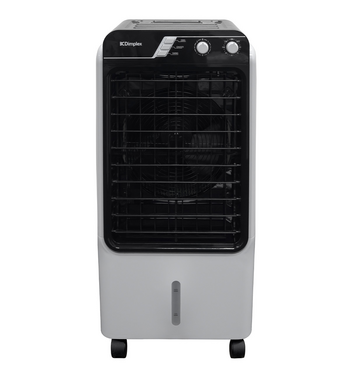
Dimplex
Dimplex 40L Evaporative Cooler DCEVP40M
Full review →From A$499.00
4.7★ (3 reviews) on Appliances Online
- + Large 40L tank means fewer refills than smaller evaporative coolers — genuinely useful for running it through a full hot day
- + Auto-swing and ionise function for wider air spread and air quality, on top of the basic cooling function
- + 2-year manufacturer warranty, longer than most in this category
- − Only 3 reviews at time of writing — a strong rating, but a thin sample to judge long-term reliability from
- − No stated room-coverage rating from the manufacturer — size it against your actual room rather than assuming whole-house coverage
- − Manual controls only, no remote — you're adjusting it at the unit, not from across the room
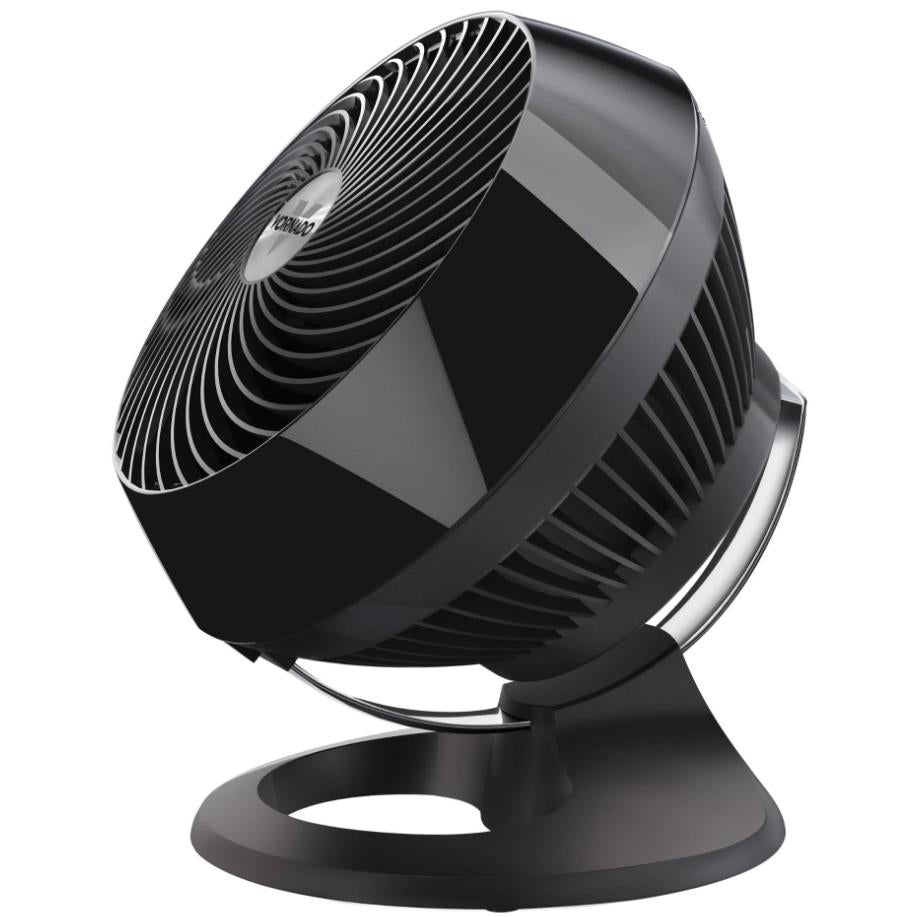
Vornado
Vornado 660 Air Circulator Floor Fan
Full review →From A$279.00
4.7★ (32 reviews) on JB Hi-Fi
- + 4.7★ from 32 reviews on JB Hi-Fi — the best-reviewed fan we found in this search, not just the best-marketed one
- + Vortex airflow circulates a whole room (rated up to 30.5m of throw) rather than just blowing directly on one spot
- + 5-year manufacturer's warranty — well above the 1–2 years typical of cheaper pedestal fans
- − No remote control or oscillation — it's a fixed-position circulator you aim once and leave, not a bedside fan you adjust from bed
- − No app control or smart features — this is a straightforward mechanical fan, not a connected one
Frequently asked questions
- Is evaporative cooling actually good in Australia, or just cheap?
- Genuinely good, not just cheap — but only in the right climate. In Perth, Adelaide, and inland dry regions, it's a legitimately smart choice on merit: cheaper to buy, substantially cheaper to run than a split system, and it adds welcome moisture to dry air, all without giving up much real cooling performance. In Brisbane's humidity or Darwin's tropical climate, the same technology genuinely struggles — that's a mechanism limitation, not a lower-quality product. Check our evaporative cooling checker for your own city rather than assuming either way.
- I'm renting — what are my realistic options?
- A portable air conditioner needs no landlord consent or strata approval, since it's just plugged in and vented through a window — that makes it the practical fallback regardless of climate or rental situation. A split system usually needs written landlord consent and, in apartment buildings, owners corporation approval too; see our split-system buying guide for how that process actually works, since a landlord can't unreasonably refuse a minor change like this.
- Does anything here actually work the same everywhere in Australia?
- A fan is the closest thing to a universal option — cheap, no installation, and performs the same regardless of humidity, though it cools you rather than the room, so it's genuinely enough for a warm night but not a real heatwave. A portable air conditioner also works consistently everywhere, at the cost of running more expensively and less efficiently than a split system doing the same job. Evaporative cooling is the one method that varies most by where you live, which is exactly why it's worth checking your specific climate rather than trusting a single national verdict.
- What about bushfire smoke — does that change any of this?
- Yes, on the specific days it's happening. Evaporative coolers draw outside air through water-soaked pads, which means smoke-affected air comes inside with it on a smoke event day — regardless of how well the unit suits your climate normally. A split system set to recirculate is the official guidance for those days specifically. See our full breakdown of which cooling method is safe during bushfire smoke for the detail.