How to Choose a Split-System Air Conditioner
Split-system is the realistic default for most Australian homes, not an upgrade — here's how sizing, installation, and renting actually work, and what happens if you're not the owner.
By KeepCoolExpert Team · Updated 14 October 2026
For most Australian homes, the real question isn’t whether to get a split system — it’s sizing, installation, and whether you’re even allowed to install one where you live. Split-system reverse-cycle air conditioning is the realistic default across most of the country, not an aspirational upgrade, and this guide is about getting that decision right rather than convincing you it’s the right category in the first place.
Sizing: the part most guides get vague about
Split systems are rated in kW of cooling capacity, and the temptation is to just buy the biggest one that fits the budget. That’s the wrong instinct — an oversized unit cools the room too fast to properly remove humidity, then cycles on and off repeatedly, which is both less comfortable and less efficient than a correctly sized one running steadily.
As a rough starting range:
| Room type | Typical capacity |
|---|---|
| Single bedroom | 2.5–3.5kW |
| Living area or open-plan space | 5–7kW+ |
| Whole small home (multi-split or ducted) | Installer-quoted, based on total floor area |
This is a starting point, not a substitute for actually sizing it — ceiling height, insulation quality, window size, and how much direct afternoon sun the room gets all shift the real number. Use our room-size calculator for a proper range before buying.
Installation is a separate job, and it isn’t optional
Unlike a portable unit you plug in yourself, a split system’s outdoor and indoor units are connected by refrigerant lines that legally require a licensed technician to install — this is a genuine legal requirement in Australia, not just a recommendation. Budget for installation as a separate cost on top of the unit price, and get quotes from at least two or three installers rather than assuming the cheapest hardware plus a random installer is the best total price.
This guide is general information to help you compare options — always use a licensed technician for the actual installation, and see our disclaimer for the full picture.
A rebate may cover part of it, depending on your state
Several Australian states run rebate schemes for high-efficiency reverse-cycle systems — Victoria and the ACT have confirmed, active schemes worth several thousand dollars for larger ducted replacements; NSW and South Australia have active schemes too, though the amount varies; and some states currently have nothing dedicated to this. It’s genuinely worth checking before you get quotes, since an accredited provider applies the discount upfront rather than something you claim back later. See our full state-by-state breakdown or the quicker rebate checker for your specific state.
If you’re renting
This is where a split system stops being a simple buying decision. Fixed air conditioning in a rental usually needs written landlord consent, and in an apartment building, often owners corporation (strata) approval as well before any installation work starts. A landlord generally can’t unreasonably refuse consent for a change like this, and most states have a tenancy tribunal you can escalate an unreasonable refusal to — but it’s worth being clear-eyed about the starting position: landlords in Australia aren’t legally required to provide air conditioning at all, so installing one as a tenant is a request you’re making, not something you’re owed.
If that approval process isn’t realistic for your situation — a short lease, an uncooperative landlord, a strata building that says no — a portable air conditioner is the practical fallback with none of that approval overhead. Our bedroom cooling guide covers how portable stacks up against a split system in more detail, and if you’re in a dry climate specifically, our evaporative cooling guide covers the other realistic alternative.
What actually differs between similarly-sized units
Once you’re comparing two units at the same kW rating, the real differences are usually:
- Smart/app control — genuinely useful if you want to turn it on before you get home, less useful if you’ll only ever use the wall remote.
- Noise rating at the indoor unit — worth checking specifically if it’s going in a bedroom, the same consideration as our bedroom cooling guide covers for other cooling types.
- Warranty length and local parts/servicing network — an established brand with a long local service history matters more over a 10+ year appliance lifespan than it does in year one.
- Review volume, not just star rating — a 4.7★ rating from 50 reviews is more evidence than the same rating from two, even for a well-regarded brand.
Worth considering
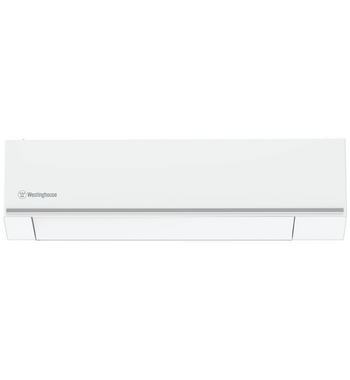
Westinghouse
Westinghouse 3.6kW Split System Reverse Cycle Air Conditioner WSD36HWA
Full review →From A$848.00
4.7★ (50 reviews) on Appliances Online
- + 4.68★ from 50 reviews — a genuinely large, trustworthy sample for a split system at this price point
- + Sleep Mode automatically adjusts temperature and fan speed overnight, and FollowMe adjusts based on your remote's location rather than the wall unit's own sensor
- + Self-clean function and app control (+Home) included as standard, not a premium add-on
- − Appliances Online showed A$848 on 2026-10-14, which it described as 49% off an RRP of A$1,649; our August check had it at A$1,569, so this looks like a sale price that may not last
- − 3.6kW suits a single bedroom or small living area — check actual room size with our room-size calculator before assuming it covers an open-plan space
- − Installation is a separate, quoted job on top of the unit price — this figure is the hardware only
- − Reverse-cycle systems like this need a professional installer for the outdoor unit and refrigerant lines, not a DIY job
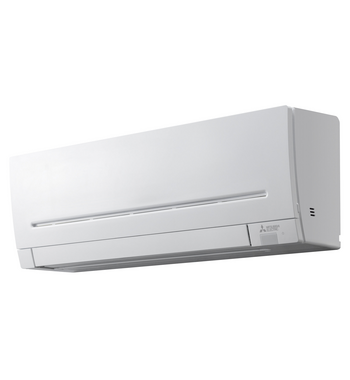
Mitsubishi Electric
Mitsubishi Electric 3.5kw Reverse Cycle Split System Air Conditioner MSZAP35VGKIT
Full review →From A$1364.00
5.0★ (2 reviews) on Appliances Online
- + Mitsubishi Electric is one of the most established reverse-cycle brands in the Australian market, with a long local parts and servicing network
- + Remote control with remote storage on the indoor unit, so it isn't a separate thing to lose
- + Same size as the Westinghouse above but currently about A$500 dearer at Appliances Online (the Westinghouse was on sale on 2026-10-14), so worth comparing directly if you're choosing between the two
- − Only 2 reviews on this listing at time of writing — the brand's reputation is well established, but this specific listing's review sample is thin
- − 3.5kW suits a single room, not an open-plan area — check with our room-size calculator before buying
- − Same as any split system: professional installation is a separate, additional cost to the unit price shown here
Frequently asked questions
- Can I install a split system myself?
- No, not the whole thing. Buying the unit is straightforward, but connecting the refrigerant lines between the indoor and outdoor units legally requires a licensed refrigerant handling technician in Australia — this isn't a DIY-friendly appliance the way a portable unit is. The installation cost is separate from, and often comparable to, the unit price itself.
- Can renters install a split system?
- Usually only with written landlord consent, and in apartment buildings, often owners corporation (strata) approval too. A landlord can't unreasonably refuse consent for a minor change like this, and most states have a tenancy tribunal you can take an unreasonable refusal to — but landlords aren't legally required to provide air conditioning in the first place, so getting one installed as a renter is a request, not an entitlement. A portable unit doesn't need any of this approval process.
- What size split system do I actually need?
- It depends on room size, ceiling height, insulation, and how much direct sun the room gets — not just floor area alone. As a rough starting point, a single bedroom typically needs 2.5–3.5kW, and a larger living area needs more. Use our room-size calculator for a proper range rather than guessing from kW alone, since an undersized unit runs constantly without ever quite catching up, and an oversized one cycles on and off inefficiently.
- Is a more expensive split system actually better?
- Not automatically. Price differences often reflect brand reputation, smart features (app control, voice assistant integration), and efficiency rating more than raw cooling capacity — two units at the same kW rating can cool a room equally well while one costs several hundred dollars more for WiFi control and a longer warranty. Decide what features you actually want before assuming the pricier option is the better cooler.