Does Evaporative Cooling Work Where You Live?
Evaporative cooling is genuinely excellent in Perth and Adelaide, and genuinely disappointing in Brisbane and Darwin — the honest answer depends entirely on your regional humidity, more than any other cooling choice on this site.
By KeepCoolExpert Team · Updated 14 October 2026
Evaporative cooling is the one cooling method on this site where “does it work” has a genuinely different answer depending on your postcode, not just your budget or room size. Get this one wrong and you can spend several hundred dollars on a unit that performs like a desk fan.
How it actually works, in one paragraph
An evaporative cooler pulls air through water-soaked pads. As the water evaporates, it absorbs heat from the air passing through, and that cooler, moister air gets blown into your room. The catch is right there in the mechanism: evaporation only happens efficiently when the surrounding air is dry enough to absorb more moisture. If the air is already humid, there’s nowhere for that water to go, and the cooling effect collapses — which is exactly why the same unit is genuinely excellent in one Australian city and close to useless in another.
The real breakdown, by climate
| Region | Typical summer humidity | Verdict |
|---|---|---|
| Perth, Adelaide, inland NSW/VIC | Often below 30–40% | Excellent — this is what evaporative cooling was designed for |
| Melbourne | Around 51% on average | Good, but borderline — effective on hot dry days, weaker through humid spells |
| Sydney (especially coastal) | Frequently above 50%, spiking higher after storms | Poor — works on dry days, struggles the rest of the time |
| Brisbane | Subtropical, consistently humid | Poor — a genuinely significant share of an evaporative cooler’s output goes to fighting humidity it can’t overcome |
| Darwin, far north Queensland | Persistently high (tropical) | Not recommended — evaporative cooling isn’t built for this climate at all |
As a rule of thumb: under 40% relative humidity, expect it to work well. Above 50%, expect a real drop in performance. Above 70%, expect it to barely cool the room at all, regardless of what the box promises.
If you’re in a good climate for it
If you’re in Perth, Adelaide, or a dry inland region, evaporative cooling is a genuinely sound choice, not a compromise — cheaper to buy than a split system, far cheaper to run, and it adds moisture back into dry air rather than fighting it. A few things worth checking before buying:
- Tank size versus how often you’re home to refill it. A larger tank (30–40L) means fewer refills through a long hot day; a smaller, more portable unit (10–15L) trades that off for easier moving between rooms.
- Real review counts, not just star ratings. A 4.7★ rating from three reviews and a 4.1★ rating from twenty-eight reviews aren’t telling you the same thing — the second is more evidence, even at a slightly lower score.
- Ducted vs portable. A whole-home ducted evaporative system is a bigger, installer-quoted purchase that cools the whole house at once; a portable unit like the two below is the lower-commitment way to try it in one room first.
The one exception, even in a good climate for it
None of the above applies on a bushfire smoke-affected day, regardless of how dry your climate normally is. An evaporative cooler works by drawing outside air through water-soaked pads — during a smoke event, that draws smoke-affected air directly into the room you’re sealing up. This isn’t specific to any brand or model; it’s true of the mechanism itself. Official guidance on those specific days is to seal the house and run a reverse-cycle air conditioner in recirculate mode instead — see our full breakdown of which cooling method is actually safe during bushfire smoke for the honest detail. It doesn’t change the case for evaporative cooling the rest of the time, just on days when the air itself is the problem.
If you’re not — here’s the honest alternative
If you’re in Brisbane, Sydney’s coastal suburbs, Darwin, or anywhere else humidity regularly sits above 50% through summer, buying an evaporative cooler is very likely to disappoint you regardless of brand or price. The honest answer for a humid climate is a split system if you can install one, or a portable air conditioner if you can’t — see our bedroom cooling guide for how those options compare, and our room-size calculator for a BTU range once you’ve settled on a cooling type.
Not sure which climate camp you’re actually in? Check your local Bureau of Meteorology summer humidity averages rather than guessing from how the air “feels” — a hot, dry 35°C day and a humid, overcast 30°C day can call for opposite answers.
Worth considering
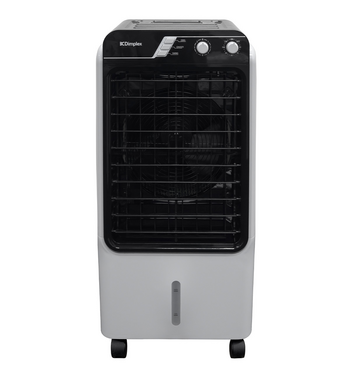
Dimplex
Dimplex 40L Evaporative Cooler DCEVP40M
Full review →From A$499.00
4.7★ (3 reviews) on Appliances Online
- + Large 40L tank means fewer refills than smaller evaporative coolers — genuinely useful for running it through a full hot day
- + Auto-swing and ionise function for wider air spread and air quality, on top of the basic cooling function
- + 2-year manufacturer warranty, longer than most in this category
- − Only 3 reviews at time of writing — a strong rating, but a thin sample to judge long-term reliability from
- − No stated room-coverage rating from the manufacturer — size it against your actual room rather than assuming whole-house coverage
- − Manual controls only, no remote — you're adjusting it at the unit, not from across the room
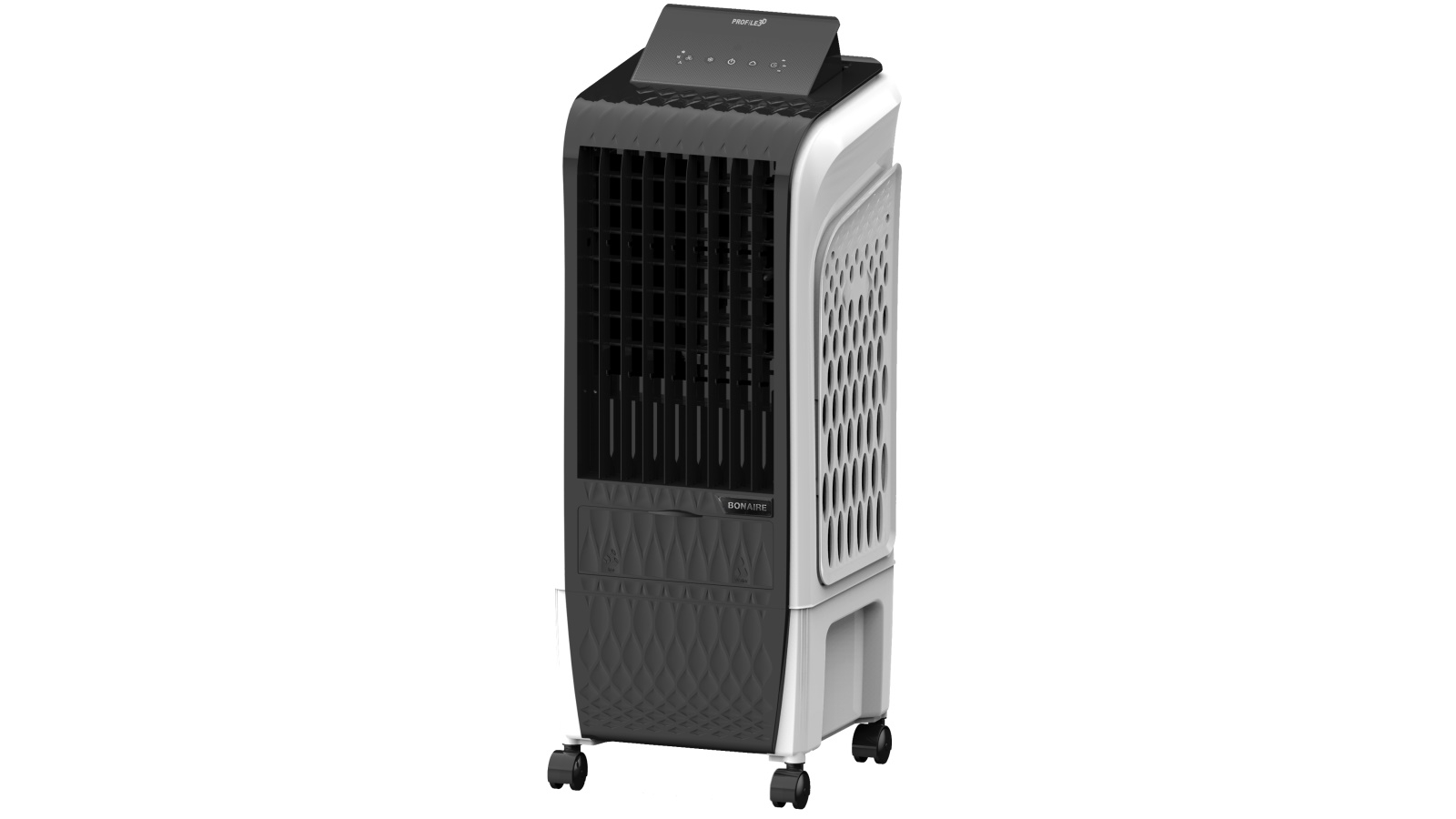
Bonaire
Bonaire Profile 3D 12i Portable Evaporative Air Cooler
Full review →From A$278.00
4.1★ (28 reviews) on Harvey Norman
- + 28 reviews at 4.1★ — a genuinely larger review sample than most evaporative coolers this size
- + Remote control with a magnetic dock and off-timer, plus multi-directional wheels for moving it between rooms
- + Bonaire is an Australian cooling specialist brand, not a generic imported appliance
- − 12L tank is smaller than larger units in this category — expect more frequent refills on hot days
- − Touch control panel rather than physical buttons, which some reviewers find less intuitive
- − Like any evaporative cooler, it's only genuinely effective in dry climates — check the guide's climate breakdown before buying
Frequently asked questions
- What humidity level makes evaporative cooling stop working?
- Evaporative coolers work best in relative humidity under 40%. Above 50%, cooling noticeably drops off. Above 70%, you're getting little to no cooling effect at all — the air is already too saturated with moisture for more water to evaporate into it, which is the entire mechanism evaporative cooling relies on. This is why the same unit performs completely differently in Perth than it does in Brisbane.
- Does evaporative cooling work in Melbourne?
- Generally yes, though it's more borderline than Perth or Adelaide. Melbourne's summer humidity averages around 51% — right at the edge of where evaporative cooling stays effective — so it works well on genuinely hot, dry days but loses effectiveness during humid spells, particularly after a summer storm. Worth knowing going in rather than being surprised by it.
- Why doesn't evaporative cooling work in Sydney?
- Coastal humidity. Sydney, especially the eastern and coastal suburbs, regularly sits in humidity ranges where evaporative cooling struggles — it may feel fine on a dry day, but performs badly through the coastal humidity, storm build-up, and muggy spells that are common through a Sydney summer. Inland Sydney suburbs fare somewhat better than coastal ones, but it's not a climate this technology was designed for.
- Is evaporative cooling cheaper to run than split-system air conditioning?
- Where it actually works — dry climates like Perth and Adelaide — yes, substantially, since it's just a fan and a water pump rather than a refrigeration compressor. That running-cost advantage is real, but it only applies if your climate is dry enough for the unit to do its job. In a humid climate, a cheap-to-run unit that isn't actually cooling the room isn't a saving, it's just a fan with extra water in it.